

 Main menu
Gamified Productivity: Turning To-Do Lists into Win Streaks
Ever stare at your daily to-do list and feel like it’s a sheer rock face—with no ropes, no trail, and your motivation slipping with every step? You’re far from alone. A 2024 Gallup report found that only 23% of employees feel genuinely motivated and engaged, a gap that quietly bleeds productivity across organizations.
So here’s the real question: What if demanding work didn’t feel like a grind at all?
What if it felt more like a challenge you wanted to beat?
That’s where gamification steps in—not as a gimmick, but as a practical, psychology-backed way to turn effort into momentum and routine into reward.
Productivity: Play Hard to Work Smart (Gamification)
Think about the last time a game pulled you in. You lost track of time, chased progress, and kept going—not because you had to, but because you wanted to. Gamified productivity borrows that exact magic.
This isn’t about turning the office into an arcade or handing out gold stars for basic tasks. It’s about applying the motivational architecture of games—clear goals, fast feedback, visible progress—to real work.
And the data backs it up. A Zippia survey (February 2022) found that 90% of employees believe gamification makes them more productive. Even more striking, organizations that adopt gamified systems reportedly generate up to seven times higher profits than those that don’t.
Game designer Jane McGonigal captures it perfectly in Reality Is Broken: Why Games Make Us Better and How They Can Change the World:
“Games teach us, inspire us, and engage us in ways reality often cannot.”
When applied thoughtfully, gamification doesn’t distract from productivity—it amplifies it.
Why Gamification Works: The Engines Behind the Motivation
- Intrinsic and Extrinsic Motivation—Working in Tandem: Gamification makes progress feel good. You experience achievement through visible milestones, while external rewards—points, badges, streaks—nudge you to start and keep moving. It’s the psychological equivalent of a tailwind.
- Clear Goals and Instant Feedback: Big goals often stall us because they’re vague and overwhelming. Gamification breaks them into bite-sized challenges with immediate feedback. Productivity apps that display progress in real-time help shrink procrastination and maintain momentum.
- Habit Formation Through Brain Science: Gamified systems tap into the classic cue–routine–reward loop. Over time, your brain begins to associate actions with satisfaction, making productive behavior feel natural rather than forced.
- Engagement That Actually Feels Human: In the workplace, gamification transforms routine tasks into challenges worth tackling. The result? Higher engagement, lower stress, and a work environment that feels less like a treadmill and more like a track meet—with a finish line in sight.
- Learning That Sticks: Gamified training programs—using leaderboards, badges, and challenges—can increase information retention by up to 90%. Learning stops being passive and starts feeling experiential.
- Leading More Collaborative Teams: Gamification isn’t just a solo sport. Shared missions and collective rewards encourage collaboration, spark healthy competition, and align teams around common goals.
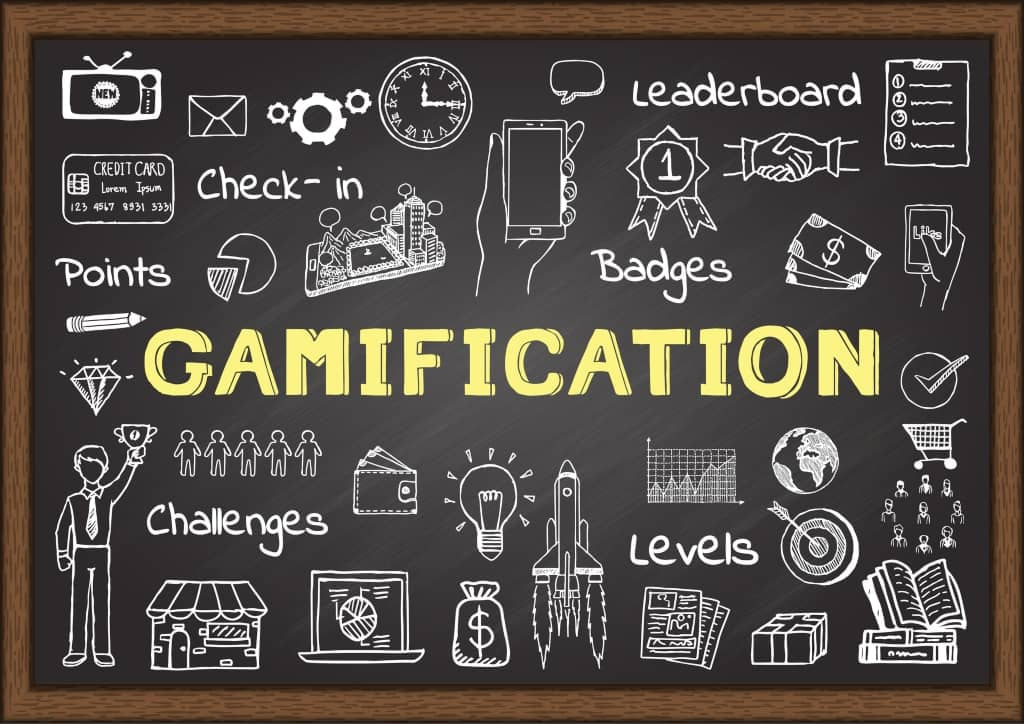
Gamification, Defined (Without the Buzzwords)
Gamification doesn’t turn life into a game. It turns work into something the brain wants to engage with.
At its core, it’s the strategic use of game design elements—challenges, progress tracking, rewards—in non-game contexts. The payoff is simple but powerful: routine tasks become stimulating, effort feels meaningful, and goals feel achievable.
In business, this matters more than ever. A Gartner study found that 70% of transformation initiatives fail due to a lack of engagement. Gamification directly targets that weak point—replacing apathy with participation and resistance with curiosity.
It’s how monotony becomes momentum—and effort turns into something you’re proud to complete.
How to Apply Gamification to Productivity Step by Step?
- Define goals and tasks: Identify boring or repetitive tasks and set clear, measurable goals for gamification.
- Break tasks into “challenges” or “levels”: Divide large goals into smaller steps that increase in difficulty, creating a sense of progress.
- Create a points and rewards system: Design incentives such as points, badges, or virtual currency based on task difficulty.
- Track progress visually: Use progress bars, leaderboards, and charts to continuously display achievements.
- Add storytelling elements: Frame tasks as part of a story or adventure and give them engaging names.
- Use time-based challenges and timers: Apply techniques like Pomodoro sessions or timed challenges to enhance focus.
- Leverage gamification apps and tools: Use dedicated tools such as Habitica and Forest to apply gamification in daily life.
- Accountability and community: Boost motivation through personal commitment or teamwork on shared challenges with collective rewards.
The Psychology Behind the Power of Games in Motivating Behavior
The effectiveness of gamified productivity is deeply rooted in psychological principles that explain why games naturally motivate us.
Gamification taps into core human drivers of achievement and engagement, transforming ordinary tasks into compelling experiences. These drivers include:
- Intrinsic Motivation: Games spark a sense of mastery and purpose. When people see themselves improving, motivation becomes self-sustaining.
- Extrinsic Motivation: Points, badges, rankings, and recognition reinforce effort and commitment—especially during the early stages of habit formation.
- Social Dynamics: Friendly competition and shared goals activate our social instincts, pushing performance higher without added pressure.
- Progress Feedback: Few things are more motivating than watching a progress bar fill. Clear feedback builds confidence, reduces frustration, and keeps energy high.
Gamification in the Real World
Gamification’s impact extends beyond theory into real success stories from global organizations:
Microsoft
To improve Windows 7 localization, Microsoft launched the Language Quality Game. The result: over 6,700 bugs identified, dramatically improving product quality.
Deloitte
The gamified Deloitte Leadership Academy increased training completion rates by 37%, proving that engagement drives learning outcomes.
Strategies to Turn Your Tasks into Fun Challenges
Gamification relies on two core strategies:
1. Defining goals as “missions” and “levels”
Breaking large tasks into smaller missions arranged in progressively challenging levels creates continuous motivation.
2. Using rewards, points, and badges
Assign points to tasks, award badges for milestones, and give yourself simple rewards. This connection between effort and reward is fundamental to behavior change and habit formation.

Tools and Apps to Support Gamified Productivity
Some of the most popular tools include:
- Spinify.
- com.
- TalentCards.
- PerkVille.
- Bounty Tasker.
- BeLiked.
- QuizGame.
- Achievers.
- Habitica.
- SAP’s Roadwarrior.
Final Level: From Chores to a Journey Worth Finishing
Procrastination and low motivation aren’t personal flaws—they’re signals that the system needs redesigning. Gamification isn’t just a productivity hack; it’s a mindset shift. It changes how we relate to work, progress, and effort itself.
When goals become levels and rewards mark progress, “play hard to work smart” stops being a catchy phrase and starts becoming a sustainable strategy for real behavioral change.
So here’s your move:
Don’t let routine drain your energy. Build your own reward system. Try a gamified productivity app. Turn your to-do list into a challenge worth winning—and make progress something you actually look forward to.
This article was prepared by coach Aisha Al Hadrami, a coach certified by Glowpass.



Stay Informed with the Latest Developments